A commercial floor coating works best when each layer has a clear job. Each stage can improve adhesion, control moisture, add thickness, increase traction, or protect the finish from wear. That layered approach allows commercial epoxy flooring to handle demanding spaces without relying on one heavy coat to do everything.
Concrete Penetrating Epoxy Primer
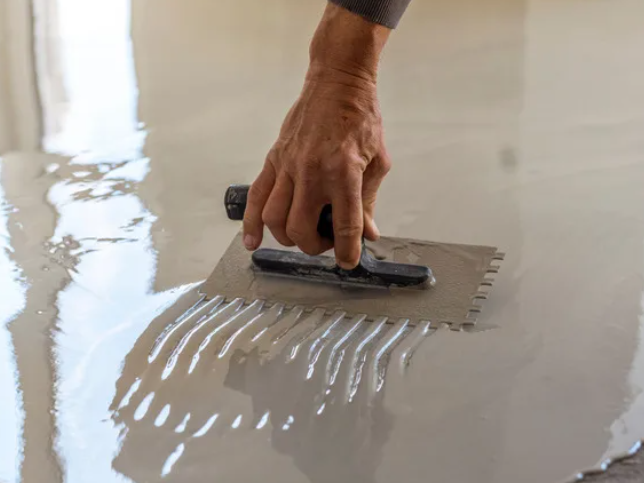
Primer creates the first resin bond with mechanically prepared concrete. Because its consistency allows it to enter open pores and small surface irregularities, it helps the next layer attach evenly across the slab. Proper coverage also reduces dry spots that can appear when porous concrete absorbs resin at different rates.
Moisture Vapor Barrier Coat
Moisture moving through concrete can create pressure beneath a coating system. Vapor-control products are designed to limit that movement when testing shows conditions that exceed what a standard primer can handle. Rather than simply adding more epoxy flooring, installers select a moisture barrier rated for the measured conditions.
Testing comes before this layer because not every slab needs the same treatment. High relative humidity readings, missing vapor barriers, or a history of moisture problems can change the coating specification. Systems installed without addressing excessive vapor may develop blisters, cloudy patches, or loss of adhesion even if the surface looked dry beforehand.
High-Build Epoxy Base Coat
High-build epoxy gives the flooring system much of its thickness, color, and physical strength. Compared with a thin paint-like coating, this layer places more cured resin between the concrete and daily traffic. Contractors control its spread rate carefully so one section does not end up thinner than another.
Aggregate Broadcast Epoxy Layer
Aggregate broadcast layers add texture and can strengthen areas exposed to frequent traffic. Installers scatter quartz, decorative flakes, or another approved material into wet resin until the desired coverage is reached. Once cured, the embedded particles become part of the floor rather than sitting loosely on top.
Full-broadcast systems can create a thicker, more textured finish suited to service areas, warehouses, retail spaces, and other demanding environments. Property managers comparing epoxy floors near me should ask what type of aggregate is being used and how much will be applied. Different broadcast rates affect traction, appearance, material use, and the amount of clear coating needed later.
Epoxy Grout and Fill Coat
Grout coats fill the spaces around broadcast aggregate and help create a more uniform surface. Depending on the system, technicians may use this layer to lock down quartz, reduce excessive texture, or prepare the floor for the final protective coats. Careful application matters because too little material can leave sharp peaks, while too much may bury useful texture.
Wear-Resistant Build Coat
Wear-resistant build coats add another layer where the floor needs greater protection from carts, tires, machinery, or repeated foot traffic. Facilities with turning forklifts, rolling toolboxes, or heavy service equipment may benefit from added resin thickness because those activities concentrate stress in predictable paths. Well-designed commercial epoxy flooring places extra durability where actual use demands it.
Thickness still has to remain within the product’s recommended range. Overspreading material can leave weak areas, while applying too much at once may affect curing or leveling. Businesses searching for epoxy flooring near me should ask how installers determine total system build rather than assuming that more coats always mean better performance.
Urethane or Polyaspartic Topcoat
Urethane or polyaspartic finishes form the upper wear surface of many multi-layer systems. These materials can add resistance to abrasion, chemicals, stains, and sunlight while protecting the epoxy layers underneath. Selection depends on the room because a retail floor, auto service area, warehouse, and production space may face very different conditions.
Clear topcoats also affect gloss, traction, and cleanability. Homeowners familiar with an epoxy garage floor near me search may recognize polyaspartic finishes from residential flake systems, but similar chemistry can serve larger commercial environments when matched to the application. Experienced epoxy floor companies consider cleaning chemicals, rolling traffic, UV exposure, and slip concerns before choosing the final layer.
Elite Coastal Epoxy can evaluate concrete condition, moisture, traffic, chemical exposure, and expected maintenance before building a layered flooring system for the property. Their team works with high-performance residential and commercial concrete finishes and can select compatible primers, base coats, broadcast materials, build layers, and topcoats so the finished epoxy flooring performs as one complete system.