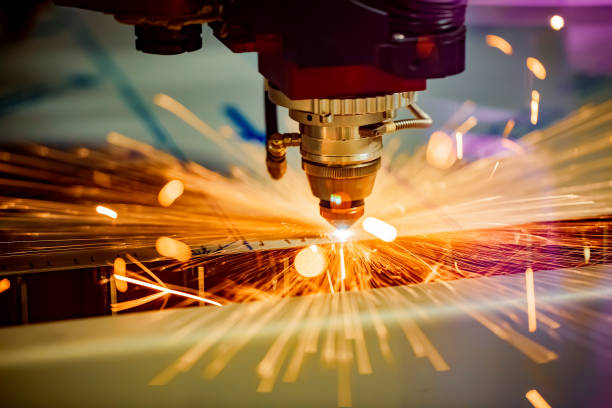
Early prototypes often decide whether a product moves forward or gets redesigned completely. Engineers need parts that do more than just look accurate on paper because testing depends on real dimensions, real materials, and real performance. CNC machining became a trusted prototyping method because it produces functional parts that behave much closer to finished production components.
CNC Prototypes Closely Match Final Production Part Performance
Prototype quality matters because weak sample parts can hide problems until production begins. Plastic mockups or simplified models may help visualize a design, but they cannot always predict how a metal component will react under pressure, heat, or vibration. CNC machining allows engineers to test prototypes using materials similar to final production parts, which creates more dependable evaluation results.
Production-level metals such as aluminum, stainless steel, and titanium respond differently under stress compared to lightweight prototype substitutes. Machined parts provide more realistic feedback during testing because the density, hardness, and structural behavior closely match the final application. Businesses searching for CNC companies near me often value this advantage because reliable prototype data can prevent expensive redesigns later.
Fast Design Changes Are Easier During CNC Prototype Runs
Product development rarely follows a perfect straight path. Engineers frequently adjust dimensions, wall thickness, mounting points, or internal features after early testing reveals weaknesses or fitment concerns. CNC machining supports rapid revisions because digital programming can be updated without rebuilding entire production tools or molds.
Revised CAD files can quickly move into new machining programs, allowing updated prototypes to be produced with less downtime. This flexibility helps manufacturers compare multiple design versions before committing to large-scale production. A capable CNC machine company can often shorten prototype turnaround while still maintaining precision during repeated design changes.
Machined Prototypes Reveal Fitment Issues Earlier in Development
Small fitment problems can create major production delays once assembly begins. Holes may sit slightly off-center, brackets may interfere with surrounding components, or hardware clearance may not match real installation conditions. CNC machining helps uncover these problems earlier because the parts are manufactured with tighter dimensional control.
Assembly testing becomes more realistic when engineers work with parts that match intended tolerances closely. Components can be physically installed, aligned, and tested against mating surfaces before production tooling is finalized. Earlier detection of fitment issues often saves manufacturers from costly production corrections after launch.
CNC Machining Produces Cleaner Surfaces for Functional Testing
Surface finish affects more than appearance alone. Rough or inconsistent surfaces can influence friction, sealing performance, airflow, and wear resistance during testing. CNC machining creates smoother finishes that help engineers evaluate how a part will function under real operating conditions.
Functional testing often depends on accurate surface contact between moving parts or sealed components. A polished machined surface provides more realistic data compared to rough prototype methods that may distort test results. Companies comparing CNC companies near me frequently pay attention to finishing capability because surface quality can directly affect prototype accuracy.
Strong Metal Prototypes Handle Real World Stress More Reliably
Structural testing becomes less meaningful when the prototype material cannot handle realistic force. Weak samples may crack, bend, or fail in ways the final production material never would. CNC machining solves this issue by allowing engineers to prototype with durable production-grade metals.
Realistic stress testing helps manufacturers understand how a part behaves during vibration, repeated impact, heat cycles, or heavy loads. Engineers can evaluate weak points before mass production begins instead of discovering failures after deployment. Stronger prototypes also improve confidence during customer demonstrations and field evaluations.
Tight Tolerance Prototypes Help Reduce Future Production Errors
Dimensional accuracy matters long before full production begins. Loose tolerances during prototyping can hide alignment issues, assembly interference, or machining limitations that later appear during manufacturing. CNC machining allows prototype dimensions to stay much closer to final production targets.
Accurate prototype measurements also improve communication between engineering and manufacturing teams. Shops can evaluate machining feasibility, fixture strategy, and inspection requirements before scaling production. Better planning during the prototype phase often reduces costly process corrections during future manufacturing runs.
CNC Prototype Parts Allow Better Thread and Hardware Testing
Threaded holes, inserts, and fastening systems often create problems during assembly if they are not tested properly beforehand. CNC machining gives engineers the ability to evaluate real hardware engagement under actual conditions instead of relying only on digital models.
Several important factors become easier to verify during threaded prototype testing:
a. bolt alignment across mating components
b. thread depth consistency under repeated use
c. hardware clearance near surrounding features
d. torque performance during assembly
These details may seem small individually, but together they influence how smoothly final products function during installation and maintenance.
Functional CNC Parts Help Engineers Validate Designs Faster
Functional testing moves much faster when engineers can work with realistic components instead of conceptual models. CNC machining provides parts that can be installed, assembled, tested, and measured under real operating conditions almost immediately after production.
Design teams often use these prototypes for airflow testing, vibration analysis, thermal evaluation, and load verification before approving full manufacturing release. Faster testing cycles help reduce development delays while improving confidence in the final design. Amtec Solutions Group supports CNC machining projects with prototype manufacturing capabilities that help businesses evaluate part performance, refine designs, and move products toward production with greater accuracy and efficiency.